О блоге
studio – здесь будем говорить про звукозапись. Какой мик использовать? Как его ставить? Ди-бокс? Микшер? Как подключать, коммутировать итд итп… В общем, все вопросы, связанные с записью звука. Т.е. как и чем записать звук и все, что с этим связано.
Администраторы (1)
Модераторы (0)
Модераторов здесь не замеченоЧитатели (119)
openid.yandex.ru-gorbadima, papa, Mandjzi, Sun, maxim_ya, n4nn31355, DEmelyanov, NIKosh, annafoxylady, sanyiteam, indyboy, GuitarMan55, FedorFender, hldreplic, terror2006, Molchynn, kaban, JimmiMontgomerry, motion2freedom, Zecht,Все читатели блога
studio /
The Pillars of Precision: Why Mathematical Rigor is Non-Negotiable in Academic Research
In the contemporary landscape of academic research, empirical findings serve as the bedrock for policy formulations, technological innovations, and paradigm shifts across diverse scientific disciplines. However, the integrity of these empirical findings depends entirely upon the structural soundness of their analytical foundations. As academic fields grow increasingly data-rich, the presence of superficial analysis poses a significant threat to systemic credibility, often resulting in irreproducible results and flawed conclusions. To counteract this vulnerability, cross-disciplinary frameworks require a foundational commitment to mathematical rigor—the unyielding application of absolute precision, logical consistency, and uncompromising mathematical optimization to every stage of empirical inquiry.Mathematical rigor transcends the simple inclusion of symbolic notation or complex statistical operations within a manuscript. It represents a strict conceptual methodology ensuring that all hypotheses are clearly defined, deductive steps are logically sound, and analytical variables are carefully operationalized. Within complex investigative models, such precision acts as an essential filter against underlying structural biases. When executing advanced empirical evaluations or constructing predictive models, specialized academic support—such as tailored Math Assignment Help—proves invaluable for establishing and verifying the necessary formal axioms, ensuring that the final analytical architecture remains mathematically flawless.The consequences of neglecting rigor extend far beyond minor calculation errors; they threaten the core stability of the broader scientific consensus. The modern academic community continues to struggle with a widespread reproducibility crisis, where a significant percentage of peer-reviewed conclusions fail to hold up under independent validation. Methodological failures typically stem from systemic vulnerabilities, including the misapplication of statistical significance metrics, arbitrary boundary conditions, and the lack of structured proofs. For researchers attempting to navigate these complex academic standards across various departments, securing reliable assignment help serves as a key strategic tool to refine methodology, validate proofs, and align empirical manuscripts with the rigorous criteria required by top-tier journals.The Structural Mechanics of Mathematical RigorAt its core, mathematical rigor operates through three essential phases: strict axiomatic definition, structured deductive verification, and systematic error containment. A research framework must begin by clearly defining its operational space. This requires establishing strict boundaries for all parameters, eliminating hidden assumptions that could distort the analytical outcome. For example, in econometric modeling, failing to precisely account for non-stationary variables can lead to spurious correlations, transforming arbitrary noise into misleading evidence of causation.Once the initial parameters are defined, the deductive process must proceed through clear, step-by-step mathematical proofs. Every transition from an initial equation to a subsequent derivative must be supported by established mathematical laws. This rigorous process protects research from the common analytical traps often found in purely qualitative or loosely quantitative studies, where conclusions can sometimes outpace the actual supporting data. Consider a foundational optimization problem evaluating a resource distribution objective function:$$\text{Maximize } Z = \sum_{i=1}^{n} \alpha_{i} x_{i} — \beta \int_{0}^{\infty} f(t) e^{-\rho t} dt$$Without enforcing precise constraints on the parameters $\alpha_{i}$, $\beta$, and $\rho$, any predictive modeling based on this framework risks becoming completely unstable. Rigorous mathematical analysis ensures that boundary constraints are explicitly integrated, proving both the existence and uniqueness of the optimal solution before generating empirical predictions.[Visual Blueprint] Pillars of Mathematical Rigor in ResearchCore DimensionMethodological ExecutionImpact on Research QualityAxiomatic IntegrityExplicitly defining baseline constraints, parameter domains, and state spaces prior to calculation.Eliminates structural bias and prevents the over-interpretation of casual correlations.Deductive ContinuityVerifying that every mathematical transition is derived directly from verified laws and formal proofs.Eliminates logical gaps; ensures the framework remains coherent under scrutiny.Error ContainmentUsing strict sensitivity testing, confidence intervals, and error propagation analysis.Establishes reliable boundaries; protects conclusions from random data variance.Mitigating the Reproducibility Crisis Across DisciplinesThe absence of mathematical rigor is a primary driver behind the modern reproducibility crisis. A notable study by the Center for Open Science revealed that over 60% of high-profile psychology and social science experiments could not be successfully replicated, largely due to statistical errors. This issue is equally prevalent in the harder sciences, where loose data practices often lead to false-positive discoveries.A frequent error involves misinterpreting the classical p-value metric. Researchers frequently use the standard threshold $p < 0.05$ as definitive proof of a causal relationship, ignoring the underlying probability distributions or the vital need for multi-comparison corrections. A mathematically rigorous methodology replaces these simple thresholds with comprehensive statistical models, such as Bayesian information criteria, statistical power calculations, and error propagation analysis. By applying these robust standards, the research community can ensure that published conclusions reflect genuine systemic phenomena rather than temporary statistical anomalies.Key Takeaways for ResearchersDefine Explicit Parameters: Never leave operational boundaries or parameter constraints unstated; clearly define your mathematical workspace.Prioritize Step-by-Step Proofs: Ensure every derivative, transformation, and structural conclusion is backed by a verifiable chain of logic.Apply Robust Statistical Models: Move beyond simple p-value thresholds; integrate comprehensive sensitivity and error propagation testing.Validate Structural Stability: Verify that your predictive equations maintain equilibrium across extreme boundary conditions.Enhancing E-E-A-T Through Analytical PrecisionFor research institutions and digital academic platforms alike, demonstrating Experience, Expertise, Authoritativeness, and Trustworthiness (E-E-A-T) is essential for earning search engine visibility and peer recognition. Google's search evaluation algorithms increasingly prioritize content that reflects genuine technical expertise and verified systemic reliability. Deep mathematical precision serves as an undeniable marker of high quality, demonstrating that the underlying material has been thoroughly analyzed and vetted.When an academic paper or technical article includes rigorous formal proofs and structured data configurations, it builds immediate institutional trust. This thorough transparency allows peer reviewers, search engine indexers, and the wider scientific community to audit the logical progression step-by-step. Consequently, rigorous mathematical analysis naturally leads to higher citation rates, authoritative backlink profiles, and a stronger reputation within the global research ecosystem.Frequently Asked Questions (FAQs)Q1: Why is mathematical rigor necessary in qualitative or mixed-methods academic research? A: While qualitative research emphasizes contextual insights, mixed-methods frameworks rely on quantitative data to validate broader trends. Applying mathematical rigor ensures that data collection boundaries, sampling weights, and statistical correlations are free from systematic errors, providing a verified foundation for qualitative conclusions.Q2: How does mathematical optimization prevent structural bias in empirical studies? A: Optimization establishes clear objective functions and constraints that account for multi-variable interactions. This prevents researchers from cherry-picking favorable data combinations, ensuring the conclusions accurately reflect the predefined analytical space.Q3: What are the primary indicators of a mathematically rigorous research manuscript? A: Key indicators include explicitly defined parameter domains, complete step-by-step proofs for all derived equations, comprehensive error propagation assessments, and the use of robust statistical criteria over basic significance thresholds.About the AuthorDr. Alistair Vance is a Senior Research Consultant and Content Strategist at MyAssignmentHelp. Holding a Ph.D. in Applied Mathematics with a specialization in stochastic modeling, Dr. Vance has spent over a decade advising postgraduate researchers on methodology, statistical verification, and analytical structuring for top-tier peer-reviewed publications.References & Empirical SourcesOpen Science Collaboration. (2015). «Estimating the reproducibility of psychological science.» Science, 349(6251), aac4716.Wasserstein, R. L., & Lazar, N. A. (2016). «The ASA statement on p-values: Context, process, and purpose.» The American Statistician, 70(2), 129-133.Ioannidis, J. P. (2005). «Why most published research findings are false.» PLOS Medicine, 2(8), e124.Gelman, A., & Loken, E. (2014). «The statistical crisis in science.» American Scientist, 102(6), 460.
- anglelika09,
- 08 июня 2026, 10:01,
- Комментировать
- ?
studio /
How to Build a Professional Business Intelligence Dashboard in Tableau:
In today's corporate landscape, data is no longer confined to static spreadsheets. According to the International Data Corporation (IDC), the global datasphere is projected to grow to over 175 zettabytes by 2025, driven heavily by enterprise cloud applications and business intelligence architectures. For undergraduate and graduate students majoring in Business Analytics, Data Science, or MBA tracks across the United States, mastering data visualization isn't merely an academic requirement—it is a critical career differentiator. Among enterprise platforms, Salesforce's Tableau stands as a dominant industry standard, positioned consistently as a Leader in the Gartner Magic Quadrant for Analytics and Business Intelligence Platforms. Developing proficiency in this software allows students to translate messy datasets into actionable executive insights. However, engineering an enterprise-grade dashboard within an academic setting presents significant challenges. University professors grade assignments not just on aesthetic appeal, but on rigorous data modeling, the precision of Level of Detail (LOD) calculations, and adhering to strict executive delivery standards. When students face tight deadlines across multiple complex modules, managing advanced calculation parameters or structural data blending can quickly become overwhelming. For those struggling to bridge the gap between abstract analytical theories and strict grading rubrics, securing professional tableau assignment help can be a highly strategic resource. Receiving structured technical walkthroughs from experienced data engineers allows students to decode intricate dashboard architectures, optimize data schemas, and master desktop mechanics before submitting their final deliverable. Before launching the software interface, professional data professionals spend a substantial amount of time on dashboard planning and operational layout strategy. An executive-level business intelligence asset must follow a linear visual hierarchy that instantly addresses core business questions. In the United States corporate ecosystem, dashboards generally conform to an inverted pyramid framework. High-level Key Performance Indicators (KPIs)—such as Gross Profit Margin, Year-over-Year (YoY) Sales Growth, or Customer Acquisition Cost (CAC)—are positioned prominently at the top left of the viewport. This placement honors standard western reading patterns. Middle sections are reserved for trend lines and regional distributions, while granular cross-tabulated data tables sit at the bottom to provide deeper analytical context when required. Key Takeaways for StudentsDefine the Business Question First: Never build visualizations without establishing the explicit KPI or operational outcome required by the project brief. Enforce Strict Visual Hierarchy: Position macro metrics at the top left and relegate raw, granular data tables to the bottom layout. Clean Data Pre-Load: Utilize Tableau Prep Builder or Excel power queries to resolve null values and data mismatches before establishing schema joins. Optimize Performance via Extracts: Use hyper extracts rather than live database connections to maximize dashboard rendering speeds. Rigorous Academic Verification: Ensure all narrative breakdowns and analytical interpretations are fully proofed for structural clarity. Step 1: Data Preparation and Schema ArchitectureA major pitfall for university students is loading raw, uncleaned transactional files directly into the platform. According to data architecture research by the TDWI (Transforming Data With Intelligence) Institute, analysts spend upwards of 60% to 80% of their project timelines on data cleaning and transformation. Before mapping out variables, you must eliminate duplicate records, standardize date formats (YYYY-MM-DD), and handle structural null fields that distort aggregated statistical metrics. Once your source datasets are prepared, leverage Tableau's logical layer relationships to link your tables together. Uniting historical physical joins which merge data into a single flattened table at a database level, logical relationships preserve the distinct granularities of individual tables. For example, if you are analyzing a retail dataset, link your 'Orders' table to your 'Returns' table using a unique identifier such as 'Order ID'. Ensure your data types match perfectly across fields; attempting to relate a string data type to an integer value will break the relationship metadata layer and cause calculation faults. Step 2: Designing the Core Layout and Visual ElementsWith a validated data schema established, you can begin designing your individual sheets. A professional dashboard must be tailored specifically to the type of variables being assessed. For temporal trends—such as quarterly revenue velocity—always select a continuous line chart. For categorical distributions, implement horizontal bar charts sorted in descending order to reduce cognitive load on the reader. Avoid using pie charts with more than three categories, as the human eye struggles to accurately interpret fine dimensional differences in angular geometry. Visual Framework: Professional Tableau Architecture (Infographic Layout)The Executive Header Block: Title, subtitle, and dynamic date parameters positioned at the very top. Macro KPI Summary Cards: High-level metrics (e.g., Net Margin, Growth %) arranged left-to-right. Primary Analytical Workspace: Chronological line trends or geographic maps filling the central canvas. Categorical Decompositions: Sorted horizontal bar charts or scatter plots detailing variances. Interactive Controls: Collapsible floating filter menus located on the right margin for user-driven exploration. When combining sheets onto a single dashboard canvas, leverage fixed layout containers instead of relying on tiled defaults. Horizontal and vertical containers give you precise control over spacing, padding, and alignment. Set your dashboard canvas size to a fixed corporate format, such as Laptop Desktop ($1000 \times 800$ pixels), rather than leaving it on automatic sizing. This ensures that your layout, text bounding boxes, and charts do not distort or overlap when viewed on your professor's monitor or an alternate projection screen. Step 3: Advanced Calculations and Performance OptimizationTo score top marks in advanced business intelligence coursework, you must go beyond basic aggregation functions like SUM and AVERAGE. Your project should demonstrate a solid mastery of Level of Detail (LOD) expressions and advanced parameters. LOD expressions allow you to compute values at a specific dimensional level without taking the underlying dashboard view depth into account. For instance, utilizing a FIXED LOD calculation allows you to determine a customer's cohort benchmark regardless of any filters applied by the end user: $$\{ \text{FIXED [Customer ID]: MIN([Order Date])} \}$$While advanced logic adds analytical depth, it can significantly slow down dashboard performance if executed poorly. To maximize efficiency, replace legacy row-level calculations with native boolean logic or integer parameters wherever possible. Furthermore, transition your workbook from a live database connection to a packaged Hyper Extract (.hyper). Data benchmarks published by software optimization groups indicate that using Hyper extracts can improve query speeds by up to 5x over live data lookups, preventing frustrating lag during an in-class presentation. Step 4: Formatting, Delivery, and Final ProofingThe final phase of dashboard production centers on corporate branding and formatting cleanliness. Select a clean, monochromatic or dual-tone color palette that matches professional styles—such as deep navy blues for neutral elements and a sharp teal for highlighting key variances. Minimize visual noise by removing heavy gridlines, zero lines, and unnecessary borders. Ensure every tooltip is customized; a default, unformatted tooltip looks unpolished and demonstrates a lack of attention to detail. Beyond the technical construction of charts, your final academic package must include an articulate narrative write-up that details your analytical findings. If your written commentary or methodology documentation is plagued by awkward phrasing, grammatical mistakes, or structural flaws, it will undermine the credibility of your entire data project. Before submitting your final deliverable, it is highly recommended to have a professional editor correct my paper to ensure that your technical arguments, syntax structure, and executive summaries conform to the highest academic writing standards. Polishing your written reports ensures your insights are conveyed clearly and matches the professionalism of your interactive visualizations. Frequently Asked Questions (FAQ)Q1: Why should I use a FIXED LOD expression instead of an INCLUDE/EXCLUDE calculation?A1: FIXED expressions calculate values using specified dimensions without referencing any other dimensions in the view, making them ideal for establishing independent baselines like customer acquisition dates. INCLUDE and EXCLUDE are view-dependent, meaning they adapt automatically to the specific dimensions actively used in your chart layout. Q2: How do I choose between a Live connection and a Tableau Extract?A2: Live connections are necessary for real-time operational streams where data updates every minute. For university assignments and case studies, always utilize a Tableau Hyper Extract, as it compresses data structures and caches queries to deliver significantly faster rendering speeds. Q3: What is the most effective way to handle missing or null values in my dataset?A3: Address null values before importing data by using tools like Tableau Prep or Excel to impute averages, replace blanks with zero, or drop corrupt rows. If done within Desktop, use the ZN() function—which converts null values to zero—to keep calculation logic from breaking. Q4: How can I ensure my dashboard layout doesn't break when viewed on different screen sizes?A4: Avoid using the 'Automatic' sizing setting on your dashboard canvas. Instead, set a fixed dimension (such as $1366 \times 768$ or $1000 \times 800$ pixels) and build your layout inside nested horizontal and vertical layout containers to maintain static element proportions. About the AuthorMarcus Vance is a Senior Business Intelligence Engineer and Lead Content Analyst at myassignmenthelp.com. Holding a Master of Science in Data Analytics from Northwestern University, Marcus has spent over eight years architecting enterprise dashboard solutions for Fortune 500 financial firms. At myassignmenthelp.com, he specializes in creating comprehensive technical curricula, academic guides, and mentoring students navigating advanced analytics coursework across the United States. Academic References & Data SourcesGartner Inc. (2025). Magic Quadrant for Analytics and Business Intelligence Platforms. Gartner Research Infrastructure Reports. International Data Corporation — IDC. (2024). Worldwide Global DataSphere Forecast, 2024–2028: Enterprise Data Trajectory. Framingham, MA. TDWI Research. (2023). Data Preparation for Modern Analytics: Best Practices for Accelerating Insights. The Data Warehousing Institute
- anglelika09,
- 03 июня 2026, 09:23,
- Комментировать
- ?
studio /
Обновление Peavey ReValver. Новые модули ACT позволяют клонировать звук любого усилителя

Ну, не ново, конечно, но полезно. Подобные фишки «клонирования» есть уже. Например в Kemper или Positive Grid BIAS.Итак, в новом обновлении нас ждут 2 новых модуля ACT Combo и ACT Rack. Первый как раз предназначен для клонирования звука с любого усилителя, а второй может анализировать спектр ранее записанного сигнала, а потом применять параметры эквализации этого сигнала для вашего трека.
Читать дальше →
- CraSS,
- 11 августа 2016, 15:25,
- Комментировать
- 0
studio /
Как играть, как Джон Маклафлин

Карьеру Джона Маклафлина можно сравнить с историей современного джаза и различных гибридный стилей, и именно поэтому, Джон – не тот музыкант, которого можно охарактеризовать несколькими небольшими примерами.Мы взяли один конкретный плодотворный творческий период с конца 60х до середины 70х. Тот период, когда были выработаны многие его идеи, получившие развитие в его дальнейшей карьере.
В период с 1969 по 1971 Маклафлин записал три сольный альбома: Extrapolation, Devotion и My Goal's Beyond. Они разнообразны и показывают его творческий путь в движении от рядового участника команды Майлса Дэвиса до лидера Mahavishnu.
Второй из перечисленный альбомов несколько жестковат, он даёт понимание того, что придет вместе с Mahavishnu Orchestra. Этот жёсткий фьюжн Mahavishnu, плюс ко всему, смешивает в себе индийские ритмы и музыкальные лады западной музыки.
Читать дальше →
- CraSS,
- 24 мая 2016, 14:34,
- Комментировать
- 0
studio /
Звукосниматели для акустической гитары

Какой звукосниматель для акустической гитары выбрать? Какие они бывают? Чем отличаются? На что обращать внимание? Пожалуй, самая нераскрытая тема в сообществе акустических гитаристов. По крайней мере, когда я сталкнулся с выбором датчика, информации на русском языке было чрезвычайно мало. Поэтому с радостью делюсь с вами своим опытом, опытом своих друзей и кумиров.
Читать дальше →
- Максим Ярушкин,
- 20 мая 2016, 17:05,
- 1
- 0
studio /
Ibanez Tube Screamer на котором играл Stevie Ray Vaughan высатвлен на продажу
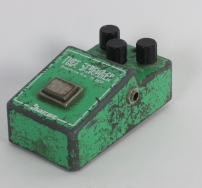
Да-да, один из тех самых Тьюб Скримеров, на котором Стиви играл многие свои хиты. Продается эта легендарная примочка в Сиэтле в магазине Emerald City Guitars.Как говорят, после смерти SRV в 1990м, его гитарный техник Cesar Diaz продал два Скримера, принадлежавших Стиви. И вот этот как раз один из них. Скример боевой, со шрамами, но полностью работоспособный.
Читать дальше →
- CraSS,
- 11 марта 2016, 15:43,
- Комментировать
- 0
studio /
Запись гитары: стоит ли менять струны перед записью

Если твои струны уже затвердели от грязи, ты можешь их сварить и приготовить супчик....Эй! Помнишь тот заголовок в гитарном журнале о подготовке к студийной работе? Тот самый, который говорит, что всегда следует менять струны перед записью инструмента, потому что тебе нужен яркий, громкий, наиболее верно интонированный звук?
Затем там была колонка, которая говорила избегать смены струн в последний момент перед записью любой ценой, потому что хорошо раскаченные струны обеспечивают более стабильный строй, плотную динамику и меньше скрежета от пальцев.
Так кто же прав? Ответ стандартный: ни «А» ни «Б» ответом: «Оба варианта верные – и все зависит от ситуации». Так давайте же послушаем разницу и объективно рассмотрим эти ситуации.
Читать дальше →
- ErMeliZ,
- 07 февраля 2016, 17:54,
- Комментировать
- +2
studio /
Сравнение 18 микрофонов для снятия гитарного звука

Записывается 2 гитарных лика, один на чистом, другой на перегрузе. Все лики играются в средней позиции звукоснимателей.Американский стандартный Телекастер ранних 90-ых — Преамп-Дибокс Creation Audio Lab MW1 — Звуковая карта Pro Tools HD. С карты звук шел в голову Mesa Boogie MKIV (На полной мощности, в режиме триода) — Кабиент Mesa 4х12 с динамиками Black Shadow (тоже Mesa) — микрофон. Всё записывается в A-образной комнате.
Читать дальше →
studio /
Stairway to Heaven (Solo) - Led Zeppelin - Подробный разбор! Pt.I (ТЕКСТ)

Всем привет!Предлагаю Вам ознакомиться с подробным видео разбором
Stairway to Heaven (Solo) — Led Zeppelin
Подробный таймкод по каждой фразе по частям на канале YouTube!
Буду рад, если подобный разбор окажется полезным!)
Читать дальше →